
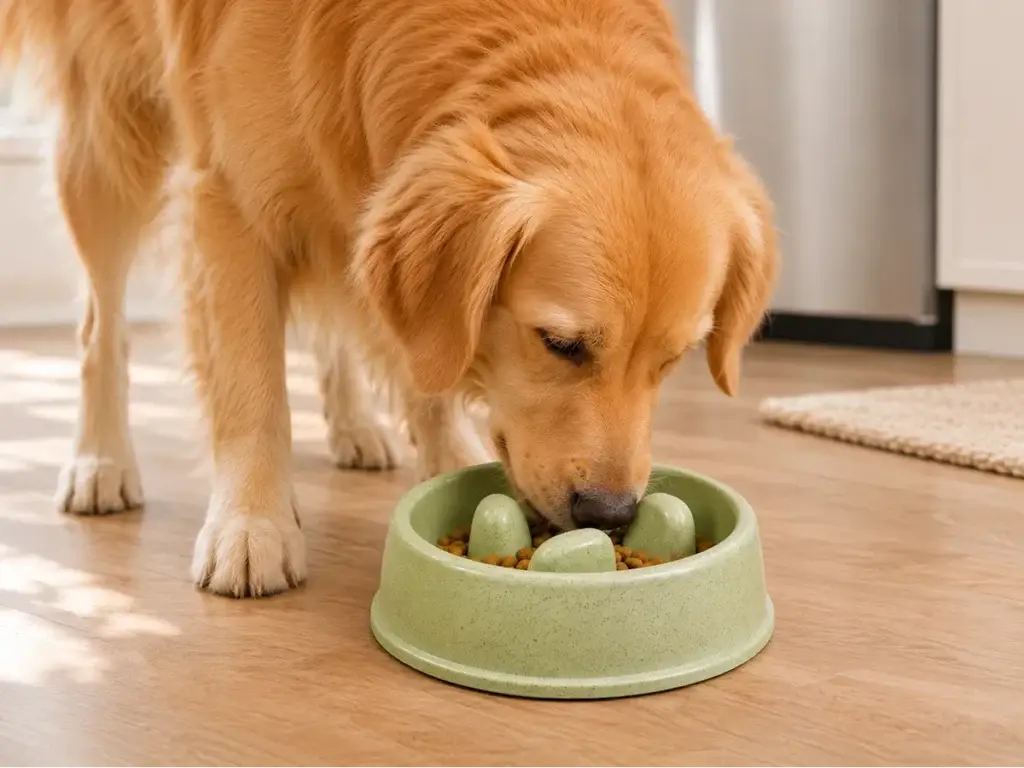
Looking for the best slow feeder dog bowls in 2026? With so many maze patterns, materials, and sizes available, finding the right one isn’t as simple as picking the most popular design.
A good slow feeder should do more than make mealtime challenging. It needs to match your dog’s size and eating habits, allow comfortable access to food, and be easy to clean. Some bowls look impressive but have narrow grooves that trap food or make feeding unnecessarily difficult.
This guide breaks down the different types of slow feeder dog bowls, compares materials and key features, and explains what matters most when choosing a product. For pet brands and wholesale buyers, it also covers essential specifications and sourcing considerations.
Key Takeaways
- Choose the right fit:Bowl capacity, muzzle shape, and feeding habits matter more than maze complexity.
- Compare materials:Plastic offers design flexibility, silicone provides flexibility, and stainless steel is valued for durability.
- Prioritize cleaning:Accessible grooves and smooth surfaces make everyday maintenance easier.
- Check stability:A broad base and effective anti-slip features help keep the bowl in place.
- For wholesale buyers:Confirm product specifications, material documentation, samples, and packaging before ordering.
What Is a Slow Feeder Dog Bowl?
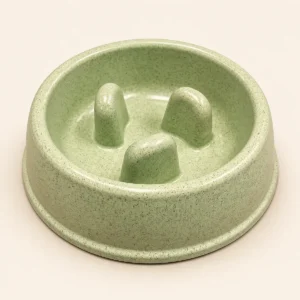
A slow feeder dog bowl uses raised ridges, grooves, or maze-like patterns to make food less immediately accessible. Instead of eating directly from an open dish, dogs must work around these obstacles to retrieve smaller portions.
The difficulty depends on channel width, ridge height, and bowl depth. A complicated pattern is not necessarily more effective, particularly for small dogs or breeds with shorter muzzles.
Slow feeders may help some dogs eat more slowly, but results vary. They should not be considered a treatment for digestive conditions or a proven method of preventing gastric dilatation-volvulus (GDV), commonly known as bloat.
Are Slow Feeder Bowls Good for Dogs?
Slow feeder bowls can be useful for dogs that finish meals too quickly. Raised ridges and feeding channels make food less immediately accessible, encouraging dogs to take smaller mouthfuls and spend more time eating.
Some dogs also benefit from the added mental engagement of working around a feeding pattern. However, the effect depends on the individual dog and the bowl’s design.
A slow feeder is not necessary for every dog. Dogs that already eat comfortably may not need additional feeding obstacles, while overly complicated patterns can cause frustration.
Importantly, slowing eating should not be confused with preventing medical conditions. There is insufficient evidence to claim that slow feeder bowls reliably prevent bloat or other digestive disorders.
Best Slow Feeder Dog Bowls by Type and Use
There is no single design that suits every dog. The most practical approach is to compare bowls by feeding needs, size, and ease of use.
For Large Dogs
Large dogs generally need greater food capacity, a wider feeding area, and a stable base.
Look for generous spacing between ridges and enough usable space to hold the dog’s normal meal. Deep, narrow channels can be difficult for broad muzzles to navigate.
Check the stated capacity rather than relying on labels such as “Large” or “XL.” A wide bowl does not always provide more usable feeding space.
For Small Dogs and Puppies
Smaller dogs often do better with shallow patterns and accessible feeding channels.
Deep maze designs may make food difficult to reach, especially for puppies or short-muzzled breeds. Start with a simple pattern and observe whether the dog can eat comfortably without persistent frustration.
For Wet Food
Wet food can stick to narrow grooves and collect around raised obstacles.
Shallow ridges, rounded corners, and smooth surfaces generally make feeding and cleaning more manageable. Check whether the bowl’s design and cleaning instructions are suitable for wet food.
For Easy Cleaning
Complex maze patterns may provide a greater challenge, but they can also trap food residue.
Choose a design with accessible grooves and minimal hard-to-reach corners. If dishwasher cleaning is important, confirm compatibility with the manufacturer’s instructions.
Slow Feeder Bowl Types Compared
| Bowl Type | Best For | Key Advantage | Main Consideration |
|---|---|---|---|
| Deep maze bowl | Dogs comfortable with challenging patterns | More obstacles to food access | Can be difficult to clean |
| Shallow ridge bowl | Puppies, small dogs, wet food | Easier access and maintenance | Less feeding resistance |
| Wide-base bowl | Large dogs | Greater stability and capacity | Requires more floor space |
| Silicone bowl | Flexible feeding applications | Lightweight and flexible | Stability varies by design |
| Stainless steel bowl | Buyers prioritizing durability | Strong, nonporous material | Feeding patterns vary |
Buying tip: Match the feeding pattern to the dog rather than choosing the most complicated design.
Slow Feeder Dog Bowl Materials Compared
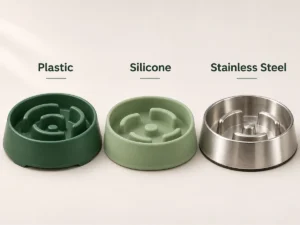
Material choice affects weight, durability, cleaning, production methods, and cost. Plastic, silicone, and stainless steel each have advantages, but the finished design matters as much as the material itself.
Plastic
Plastic allows manufacturers to create detailed maze patterns, integrated ridges, and a wide range of colors and sizes.
It is generally lightweight and suitable for molded designs. However, durability depends on resin quality, wall thickness, and surface finish. Check for rough edges, scratches, and areas where food residue may collect.
Silicone
Silicone is flexible and commonly used for shallow feeding patterns and portable designs.
Its performance depends on hardness, thickness, and base construction. A flexible bowl may be convenient to handle but can move or deform during feeding if the design lacks sufficient support.
Stainless Steel
Stainless steel offers durability and a nonporous feeding surface.
However, feeding obstacles may be formed into the bowl or incorporated as separate components. Buyers should examine joints, surface finishes, and cleaning accessibility rather than assuming all stainless steel designs perform alike.
Material Comparison
| Feature | Plastic | Silicone | Stainless Steel |
|---|---|---|---|
| Weight | Lightweight | Lightweight and flexible | Generally heavier |
| Design flexibility | High | Suitable for flexible forms | Depends on construction |
| Durability | Varies by resin | Varies by formulation | Generally strong |
| Cleaning | Depends on surface and pattern | Depends on groove design | Often straightforward |
| Key consideration | Material quality and finish | Hardness and stability | Grade and construction |
The best material depends on the dog’s needs, cleaning expectations, and intended product use. No material is universally superior.
How to Choose the Right Slow Feeder Dog Bowl
Three factors deserve attention before purchasing: capacity, feeding difficulty, and stability.
- Bowl Size and Capacity
Choose a bowl that holds the dog’s usual meal without overfilling. Consider muzzle shape and the space between obstacles, not just the outside diameter.
- Maze Depth and Feeding Difficulty
Raised ridges should slow access without making food excessively difficult to retrieve. For dogs new to slow feeders, begin with a moderate pattern and observe their feeding behavior.
- Stability and Food Compatibility
A broad base, suitable weight, or anti-slip surface can help prevent movement. Also check whether the design accommodates dry kibble, wet food, or both.
A bowl that works well for one dog may be unsuitable for another. Comfort and practical use should guide the final choice.
Cleaning and Safety Considerations
Clean the bowl according to the manufacturer’s instructions after meals, paying particular attention to grooves, corners, and removable components.
Inspect it regularly for cracks, damaged edges, or loose parts. Replace products that become difficult to clean or unsuitable for continued use.
Supervise dogs when introducing a new slow feeder. If the dog becomes frustrated, refuses food, or struggles to reach it, consider a simpler pattern.
Persistent vomiting, swallowing difficulties, or unusual feeding behavior should be discussed with a veterinarian.
What Should Wholesale Buyers Look for in Slow Feeder Dog Bowls?
For pet brands, retailers, and distributors, product selection also involves manufacturing consistency, customization, and quality documentation.
Three areas are especially important when comparing suppliers.
Product Specifications and Materials
Prepare a product brief covering material, dimensions, usable capacity, feeding pattern, colors, and surface finish.
Ask suppliers for relevant material information and food-contact documentation appropriate to the intended market. For product ranges with multiple sizes, confirm specifications for each SKU.
OEM and Private Label Options
Businesses sourcing custom slow feeder dog bowls may require branded colors, logo applications, customized packaging, or design variations.
Available options depend on materials, tooling, production methods, and order quantities. Retail packaging should clearly identify the product’s dimensions, materials, and care instructions.
Samples, MOQ, and Quality Control
Before placing a bulk order, inspect samples for dimensional accuracy, surface finish, stability, and packaging quality.
When comparing slow feeder dog bowls wholesale quotations, confirm minimum order quantity (MOQ), tooling charges, lead time, inspection requirements, and shipping terms.
Consistent specifications across production batches are particularly important for private-label product collections.
Conclusion
The best slow feeder dog bowls balance feeding difficulty with comfort, stability, and ease of cleaning. Size, material, and ridge design should be chosen according to the dog’s actual needs.
For wholesale buyers, clear product specifications, sample approval, and consistent quality are equally important.
WVSCM supports B2B pet product sourcing and customization. Explore our slow feeder bowl solutions or contact our team to discuss specifications, private-label packaging, and sourcing requirements.
FAQs
Are slow feeder bowls good for dogs?
Slow feeder bowls may help some dogs eat more slowly by limiting immediate food access. Effectiveness depends on the dog’s feeding behavior and bowl design.
What size slow feeder bowl does my dog need?
Choose a bowl that holds the normal meal portion and allows comfortable food access. Consider muzzle shape, usable capacity, and feeding habits.
Are stainless steel slow feeder bowls better than plastic?
Not necessarily. Stainless steel offers durability, while plastic supports more complex molded patterns. Design quality, cleaning requirements, and intended use determine the better choice.
Are slow feeder bowls safe for puppies?
Appropriately sized bowls may suit puppies under supervision. Start with shallow patterns and monitor feeding behavior to ensure food remains accessible.
Can you put wet food in a slow feeder bowl?
Yes, if the design accommodates wet food. Shallow grooves and accessible surfaces generally make feeding and cleaning easier.
Let's discuss your product requirements.
Share your product brief, estimated quantity and target timeline with WVSCM.
Request a Quote