


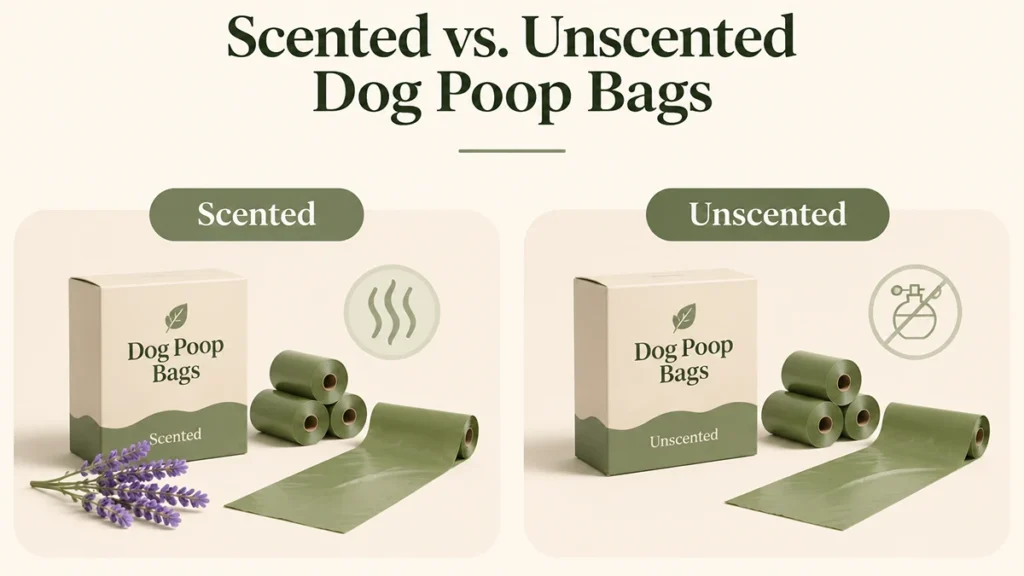
Scented vs. unscented dog poop bags differ mainly in their fragrance formulation and the experience they provide during cleanup. Scented bags contain added fragrance, while unscented bags are designed without intentionally added fragrance. Both types serve the same basic purpose: collecting and containing pet waste.
For pet product brands, importers, and wholesalers, choosing between these options involves more than fragrance preference. Material composition, film thickness, bag construction, sealing quality, and fragrance formulation all influence product specifications. Understanding these differences helps buyers develop suitable product ranges and make more informed sourcing decisions.
Quick Answer
Scented dog poop bags contain added fragrance, such as lavender or fresh scent, to change the smell perceived during cleanup. Unscented dog poop bags are designed without intentionally added fragrance. Neither type is inherently stronger or more leak-resistant. Those properties depend on material composition, thickness, construction, and manufacturing quality.
Key Takeaways
- Scented bags: Include added fragrance and provide a scented cleanup experience.
- Unscented bags: Offer an option without intentionally added fragrance.
- Odor management: Fragrance can mask some unpleasant smells, while containment depends on bag construction and closure.
- Physical performance: Material, thickness, and sealing quality influence strength and leakage resistance.
- B2B sourcing: Buyers should assess formulation, specifications, customization, packaging, and quality controls separately.
What Are Scented Dog Poop Bags?
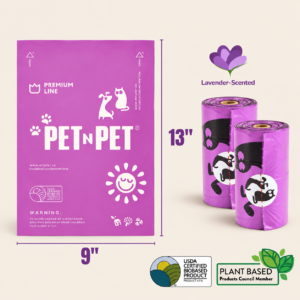
Scented dog poop bags are waste collection bags made with added fragrance. Their purpose is to provide a noticeable scent during handling and potentially mask some unpleasant smells.
Common fragrance options include:
- Lavender: A floral scent frequently used in pet waste products.
- Fresh Scent: A general fragrance developed for a clean-smelling product experience.
- Custom Fragrances: Options selected around a brand’s product positioning and target market.
The fragrance may be incorporated into the film formulation or introduced through another manufacturing process. The method depends on the supplier’s production capabilities and product design.
Scented dog waste bags are often positioned as an additional choice within a pet waste product range. Their fragrance creates a product distinction without necessarily changing the bag’s dimensions, structure, or intended function.
For private-label buyers, fragrance selection should be treated as a separate product specification. Confirm the fragrance type, formulation details, sample approval requirements, and consistency across production batches.
What Are Unscented Dog Poop Bags?
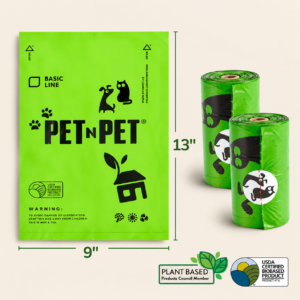
Unscented dog poop bags are designed without intentionally added fragrance. They provide a neutral fragrance experience for consumers who prefer products without added scent.
These bags perform the same basic waste collection function as scented products. Their suitability depends on material composition, film quality, bag dimensions, and sealing performance.
Unscented options are commonly included in pet waste product collections as a standard product choice. They can also serve retailers whose customers prefer products without added fragrance.
Are Unscented and Fragrance-Free Dog Poop Bags the Same?
Unscented and fragrance-free describe related but distinct product characteristics.
- Unscented: Generally describes a product without an intentionally noticeable fragrance.
- Fragrance-free: Indicates that fragrance ingredients are not included in the formulation, subject to the product’s actual composition and labeling requirements.
A product’s name alone does not establish its complete ingredient profile. Buyers should review formulation information and supplier declarations before using either description in product labeling.
For private-label projects, this distinction matters because product descriptions should accurately reflect the finished formulation. Clear ingredient information also helps maintain consistency between the approved sample, packaging, and production orders.
How Do Scented and Unscented Dog Poop Bags Compare?
The main difference between scented and unscented dog poop bags is whether fragrance is added. Their physical performance should be assessed through separate product specifications.
| Comparison Factor | Scented Dog Poop Bags | Unscented Dog Poop Bags |
|---|---|---|
| Fragrance | Contains added fragrance | No intentionally added fragrance |
| User Experience | Provides a scented experience | Provides a neutral fragrance experience |
| Odor Perception | May mask some unpleasant smells | Does not add fragrance to mask smells |
| Common Options | Lavender, fresh scent, custom fragrances | Standard unscented formulations |
| Consumer Preference | Suits fragrance-preferring users | Suits users who prefer no added scent |
| Formulation | Includes fragrance-related ingredients | Depends on the specific formulation |
| Retail Positioning | Fragrance-focused product option | Standard or no-added-fragrance option |
Which Type Offers Better Bag Performance?
Neither fragrance type automatically provides better strength, durability, or leakage resistance.
These properties depend on the film formulation, thickness, manufacturing process, and sealing quality. A well-constructed unscented bag can perform better than a poorly constructed scented bag.
For buyers, this distinction is important when comparing supplier quotations. Fragrance should be listed as one product attribute, while physical performance should have its own agreed specifications.
A useful comparison should include bag dimensions, material composition, thickness, opening design, and seal quality. These details provide a more consistent basis for evaluating products across manufacturers.
Do Scented Dog Poop Bags Help Control Odors?
Scented dog poop bags may mask some unpleasant smells through added fragrance. The fragrance changes the smell perceived during cleanup, while actual odor containment depends on the bag’s material and construction.
Fragrance and Odor Masking
Fragrance changes the product’s scent profile. Lavender and fresh-scent formulations are common examples.
The resulting experience depends on the fragrance formulation and its concentration. Individual preferences also vary, so a fragrance that one customer enjoys may feel too strong to another.
For product development, fragrance samples should be reviewed before mass production. Buyers should confirm the intended scent profile and acceptable consistency.
Odor Containment
Odor containment relates to the bag’s ability to hold waste securely and limit odor release during normal handling.
Relevant product factors include:
- Film composition and thickness.
- Bag construction and seal integrity.
- Resistance to punctures or damage.
- Bag closure and tying.
- Proper handling after collection.
A scented product should not be described as odor-proof solely because it contains fragrance. Likewise, an unscented product may provide suitable odor containment when its construction meets the intended requirements.
Closure and Disposal
Closing the bag securely helps contain collected waste during handling and disposal.
For buyers, product claims about odor control should be based on the actual function being evaluated. Fragrance masking and demonstrated odor-barrier performance are different claims and require different supporting evidence.
Does Fragrance Affect Dog Poop Bag Quality and Performance?
Fragrance and physical bag performance are separate product considerations. Adding fragrance does not automatically improve or reduce a bag’s strength, flexibility, or leakage resistance.
The finished product should be evaluated through its formulation, construction, and applicable performance tests.
Material Composition and Film Thickness
Dog poop bags are commonly produced using polyethylene-based film formulations. Material selection influences flexibility, strength, and other finished-film characteristics.
Film thickness is typically measured in microns (μm). One micron equals 0.001 millimeters. This unit allows buyers to compare the nominal thickness specified by different suppliers.
However, thickness alone does not determine overall bag quality. Resin selection, film processing, material consistency, and bag construction also influence performance.
For procurement teams, confirming both material composition and thickness helps establish comparable product specifications.
Bag Construction and Sealing Quality
The bag’s seams and seals are important to its ability to contain collected waste.
Inconsistent sealing can create weak points during normal handling. Bag dimensions and opening design also affect how easily consumers can separate, open, and use each bag.
Buyers should review:
- Seal consistency across production samples.
- Film uniformity and surface finish.
- Bag opening and separation.
- Resistance to tearing during intended use.
- Leakage performance under agreed test conditions.
These checks help identify construction issues before a product enters mass production.
Fragrance Formulation and Consistency
Fragrance is an additional formulation consideration for scented dog poop bags.
Buyers should confirm the selected fragrance, formulation requirements, and manufacturing method with the supplier. They should also review whether fragrance consistency is included in the production quality-control process.
Changes to fragrance ingredients or manufacturing inputs may require sample reapproval. This helps ensure that the finished shipment matches the approved product.
Product Testing and Quality Verification
Product testing helps determine whether a bag meets its agreed performance requirements.
Depending on the product specification, relevant checks may include:
- Film thickness measurement.
- Tensile strength.
- Tear resistance.
- Seal integrity.
- Leakage performance.
- Fragrance consistency.
Each test should use a defined method and suitable acceptance criteria. Results should correspond to the actual product formulation and construction being purchased.
For wholesale and private-label programs, documented specifications and consistent inspection procedures provide a stronger basis for repeat-order quality control.
For a closer look at the factors that influence bag durability, explore our guide to high-quality dog poop bags.
Which Type Is Better for Retail and Private-Label Programs?
Neither scented nor unscented dog poop bags is universally better for retail. The appropriate option depends on the target customer, brand positioning, and product assortment.
Offering both types can give retailers more flexibility when developing a pet waste collection.
Scented Bags for Fragrance-Focused Product Lines
Scented bags provide an additional product option for customers who prefer fragrance during cleanup.
Lavender and fresh-scent options can support different retail presentations. Packaging can also communicate the fragrance type clearly, helping customers distinguish products on the shelf.
For brands developing scented products, fragrance consistency and sample approval should be part of the product development process.
Unscented Bags for No-Added-Fragrance Options
Unscented bags provide a standard alternative for consumers who prefer products without intentionally added fragrance.
They can complement scented products within the same collection. This approach gives retailers options for different consumer preferences without requiring entirely different product categories.
The formulation and product description should remain consistent with the supplier’s actual material information.
Developing a Balanced Product Assortment
A brand can develop a coordinated range around fragrance preferences and packaging requirements.
| Product Option | Potential Retail Positioning |
|---|---|
| Unscented Bags | Standard everyday option |
| Lavender Scented Bags | Floral fragrance option |
| Fresh-Scented Bags | Alternative fragrance option |
| Custom-Scented Bags | Brand-specific product development |
For private-label dog poop bags, buyers can also consider roll quantities, film colors, bag dimensions, printing, and retail packaging.
A focused product assortment is often easier to manage than introducing too many variations at once. SKU decisions should reflect customer demand, sales channels, inventory requirements, and sourcing costs.
Beyond fragrance preferences, choosing the right product requires evaluating size, material, thickness, and everyday usability. See our guide on how to choose the best dog poop bags.
What Should Buyers Check When Sourcing Dog Poop Bags?
When sourcing dog poop bags, buyers should compare fragrance options, material specifications, product construction, customization, and manufacturing consistency.
A clear specification sheet makes supplier quotations easier to evaluate and reduces misunderstandings during production.
| Sourcing Factor | What Buyers Should Verify | Business Implication |
|---|---|---|
| Fragrance Options | Scented, unscented, and available formulations | Defines product positioning |
| Material | Film composition and material specifications | Establishes product requirements |
| Thickness | Nominal thickness in microns (μm) | Supports supplier comparison |
| Bag Dimensions | Length and width in consistent units | Confirms product compatibility |
| Construction | Seal quality and opening design | Supports functional performance |
| Customization | Printing, film color, and packaging | Supports private-label development |
| MOQ | Minimum order quantity and order unit | Influences purchasing commitments |
| Quality Control | Inspection procedures and test records | Supports batch consistency |
Confirm Product Specifications
Before requesting quotations, define the product’s dimensions, material requirements, thickness, bag structure, fragrance, and packaging configuration.
These details allow suppliers to quote against the same product requirements. They also provide a reference for sample approval and production inspection.
Review Customization and Private-Label Options
Private-label projects may involve custom printing, film colors, packaging designs, and fragrance selection.
Buyers should confirm the supplier’s available customization methods and any related setup or tooling requirements. The approved sample should serve as the production reference.
Clarify MOQ and Production Lead Time
Minimum order quantities vary by manufacturer, product configuration, and customization requirements.
Custom printing, fragrance selection, and packaging may affect production arrangements. Buyers should confirm MOQ, sample timing, production lead time, and order requirements before placing an order.
Establish Quality Control Requirements
A sourcing agreement should define the approved product specifications and finished-product inspection criteria.
Depending on the project, buyers may request material declarations, thickness records, relevant performance test reports, fragrance information, and production inspection records.
For repeat wholesale orders, these records help maintain consistency between approved samples and subsequent shipments.
Review Packaging and Shipping Requirements
Packaging affects product presentation, storage, and shipment planning.
Confirm bags per roll, rolls per retail box, boxes per carton, carton dimensions, and labeling requirements. These details help buyers compare complete order configurations rather than relying on unit price alone.
For bulk dog poop bags, carton configuration and shipping arrangements should be included in the overall purchasing evaluation.
Final Thoughts
Choosing between scented and unscented dog poop bags comes down to personal preference. Scented bags add a pleasant fragrance that can help mask unpleasant smells, while unscented bags offer a simple option for those who prefer no added scent. Both work for everyday dog waste cleanup.
For dog owners, the right choice depends on what feels more comfortable during daily walks. Bag quality, durability, and leak resistance also matter.
For retailers and private-label brands, offering both options can appeal to different customer preferences and create a more complete product range.
FAQs
Are scented dog poop bags better than unscented ones?
Neither option is universally better. Scented bags provide added fragrance, while unscented bags suit customers who prefer products without intentionally added scent. Buyers should compare material quality, thickness, sealing, and product specifications separately.
Do scented dog poop bags eliminate unpleasant odors?
Added fragrance may mask some unpleasant smells, but it does not establish that the source of the odor has been eliminated. Actual odor containment depends on the bag’s construction, material, closure, and intended use.
What are the most common scents used in dog poop bags?
Lavender and fresh-scent formulations are common options in the pet waste category. Other fragrance options may be available through custom product development. Buyers should confirm formulation details and approve samples before production.
Are unscented and fragrance-free dog poop bags the same?
The terms are related but have different implications. Unscented generally describes a product without an intentionally noticeable fragrance. Fragrance-free refers to a formulation without fragrance ingredients. The actual composition should be confirmed through supplier documentation.
Does Fragrance Affect Dog Poop Bag Strength?
Fragrance alone does not determine bag strength or durability. These properties depend on the film formulation, thickness, manufacturing process, and seal construction. Buyers comparing scented and unscented products should evaluate physical performance separately and request relevant product specifications or test results.
Let's discuss your product requirements.
Share your product brief, estimated quantity and target timeline with WVSCM.
Request a Quote