

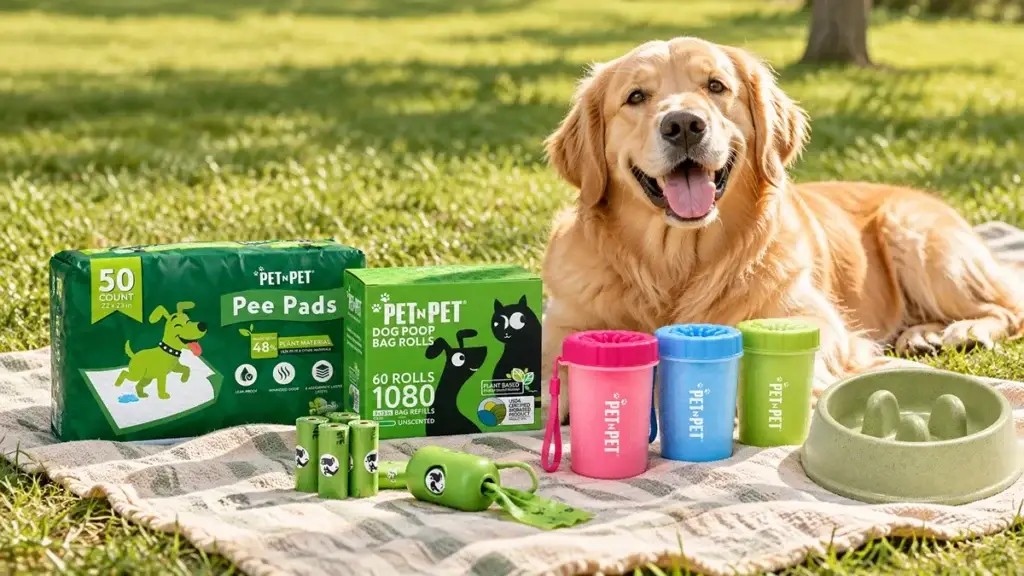
Most pet supplies earn their place in a routine for a simple reason: they solve the same small problems again and again. Walks create cleanup needs. Wet or muddy paws need attention before coming indoors. Training requires quick access to treats. Feeding products are used every day.
A useful pet supplies checklist should therefore focus less on how many products a household owns and more on whether those products fit real daily routines.
This guide covers six practical pet care essentials commonly used for cleanup, training, walking, and feeding, along with the specifications worth checking before choosing them.
Key Takeaways
- Everyday pet supplies are most useful when they solve recurring needs such as cleanup, walking, training, and feeding.
- Product specifications matter. Size, thickness, absorbency, material, and construction can affect performance even when two products look similar.
- Poop bags, pet wipes, training pads, paw cleaners, treat pouches, and feeding products serve different parts of the daily routine.
- Environmental claims such as biobased, biodegradable, and compostable should be evaluated separately.
- A shorter list of well-chosen products is often more practical than a large collection of rarely used accessories.
Everyday Pet Supplies Checklist at a Glance
The products below cover six common parts of daily pet care.
| Daily Need | Essential Supply | What to Check |
|---|---|---|
| Waste Cleanup | Dog Poop Bags | Size, film thickness, leak resistance |
| Quick Cleaning | Pet Wipes | Sheet size, material, GSM, moisture |
| Indoor Routine | Training Pads | Dimensions, absorbency, backing |
| After-Walk Cleaning | Dog Paw Cleaner | Paw fit, bristle softness, cleaning |
| Walking & Training | Treat Pouch | Capacity, closure, attachment |
| Feeding | Slow Feeder Bowl | Size, maze design, stability |
These products support everyday routines, but they do not replace basic needs such as food, fresh water, identification, appropriate walking equipment, or veterinary care.
1. Dog Poop Bags for Daily Waste Cleanup
For most dog owners, poop bags are consumables rather than occasional accessories. That makes small differences in construction more noticeable over time.
Bag size is one of the first specifications to check. A bag that is too small can be awkward to use, while unnecessary extra material adds bulk to each roll. Film thickness also matters, although thickness alone does not determine strength. Material formulation, sealing quality, and overall construction all affect puncture and leak resistance.
When comparing dog poop bags, check:
- Bag dimensions
- Film thickness
- Seal quality
- Tear and puncture resistance
- Roll size and dispenser compatibility
- Scented or unscented options
- Material composition
Material claims require separate attention. A bag with biobased content is not automatically biodegradable, and a biodegradable bag is not automatically compostable.
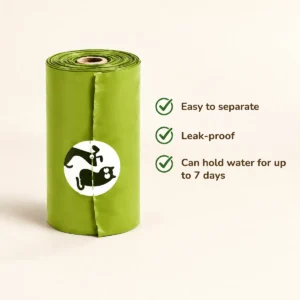
For daily walks, consistency matters more than marketing language. The bag should open easily, separate cleanly from the roll, and provide reliable containment during normal use.
2. Pet Wipes for Quick Everyday Cleaning
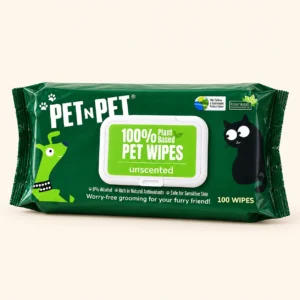
Pet wipes are useful when a full wash is unnecessary. Typical situations include wiping paws after a dry walk, removing light dirt from the coat, or handling small messes while traveling.
The visible package tells only part of the story. Wipe performance depends heavily on the substrate.
Important specifications include:
- Sheet dimensions
- GSM, or fabric weight
- Fiber composition
- Surface texture
- Wet strength
- Moisture level
- Fragrance or unscented formulation
- Packaging seal quality
A larger wipe is not always thicker, and a thicker wipe is not necessarily softer. GSM, fiber blend, and manufacturing method all influence how the sheet feels and performs when wet.
Packaging is also easy to overlook. Wipes are often opened repeatedly over several weeks, so a weak reseal can reduce moisture retention long before the pack is finished.
If a wipe uses bamboo-derived, plant-based, or biobased material, buyers should still verify exactly what the claim covers. Fiber origin alone does not establish whether the finished wipe is biodegradable or compostable.
3. Training Pads for Indoor Routines
Training pads are usually judged by absorbency, but absorbency is the result of several components working together.
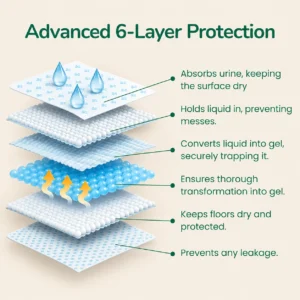
A disposable pad commonly includes a surface layer, tissue or distribution layers, an absorbent core containing pulp and super absorbent polymer, and a leak-resistant backing film.
When comparing pads, look at:
- Finished pad dimensions
- Total product weight
- Core composition
- Absorbency and liquid retention
- Surface dryness
- Leak-resistant backing
- Edge sealing
Layer count can be useful information, but it should not be treated as a quality score. Two six-layer pads can perform differently if the amount of pulp, SAP distribution, backing quality, or pad weight differs.
For product buyers, specification sheets are often more useful than front-of-pack claims such as “extra absorbent” or “heavy duty.”
The intended use also matters. A pad designed for a small puppy may not be suitable for a larger dog or a longer period between changes.
4. A Paw Cleaner for Heavier After-Walk Messes
Pet wipes work well for light dirt. Mud packed around the paw pads is a different problem.
Cup-style paw cleaners typically use soft, flexible bristles that surround the paw and help loosen dirt when the paw is gently moved inside the cup. Their usefulness depends heavily on fit.
Important factors include:
- Cup opening diameter
- Internal depth
- Bristle softness
- Material flexibility
- Ease of disassembly
- Ease of rinsing and drying
A paw cleaner that is too narrow can be uncomfortable, while one that is too wide may not clean effectively.
In practice, wipes and paw cleaners are better viewed as complementary products rather than direct substitutes. A wipe suits quick surface cleaning. A paw cleaner is more useful when mud, sand, or debris has worked into the spaces around the paw.
5. A Treat Pouch for Walks and Training
A good treat pouch is less about storage capacity than access.
During training or walks, rewards often need to be reached quickly. If the opening is difficult to use or the pouch swings excessively while walking, a larger capacity offers little benefit.
Useful design details include:
- One-hand access
- Secure closure
- Comfortable attachment
- Suitable capacity
- Easy-clean lining
- Additional storage pocket
- Integrated poop bag dispenser
For everyday use, simple layouts are often the most practical.
A pouch with a built-in waste bag dispenser can reduce the number of separate accessories carried during a walk. That makes it particularly useful for people who already carry treats as part of training or reinforcement.
When comparing textile products, also look at stitching, zipper quality, attachment hardware, and interior lining rather than judging the product by fabric appearance alone.
6. A Slow Feeder Bowl for Everyday Feeding
Slow feeder bowls use ridges, channels, or maze patterns to make food less immediately accessible than in a standard open bowl.
The design matters more than the number of ridges.
A useful slow feeder should match the pet’s size and allow food to remain reachable without turning feeding into unnecessary frustration.
Important considerations include:
- Bowl diameter
- Food capacity
- Maze depth and spacing
- Pet size and muzzle shape
- Material
- Base stability
- Ease of cleaning
- Suitability for wet or dry food
Material also changes the user experience. Rigid plastic is lightweight and easy to mold into complex shapes. Silicone offers flexibility and grip. Stainless steel provides a different balance of weight, durability, and cleaning.
For products used twice a day or more, cleaning should be treated as a major design factor. Narrow channels and deep corners may look distinctive but can make residue harder to remove.
How to Choose Everyday Pet Supplies
The most useful everyday pet supplies are usually the products that match an existing routine rather than create a new one.
Start With the Use Case
Before comparing brands or features, define the problem the product needs to solve.
For example:
- Daily walks require reliable waste cleanup.
- Light outdoor dirt may only require wipes.
- Muddy paws may need deeper cleaning.
- Indoor potty routines require suitable pad size and absorbency.
- Frequent training makes quick treat access important.
- Feeding products need to match food type and pet size.
This sounds basic, but it prevents overbuying and makes product comparisons much easier.
Compare Specifications, Not Just Claims
Terms such as “premium,” “heavy duty,” and “extra absorbent” are difficult to compare without supporting specifications.
More useful information includes:
- Dimensions
- Material composition
- Thickness or GSM
- Product weight
- Capacity
- Construction
- Testing or certification where relevant
Specifications make it easier to compare similar products on a consistent basis.
Pay Attention to Materials
Material selection affects strength, softness, absorbency, flexibility, cleaning, and durability.
Common examples include:
- Plastic film in poop bags and liners
- Nonwoven fabric in pet wipes
- Pulp and SAP in training pads
- Silicone in paw cleaners and feeding products
- Textile materials in treat pouches
- Rigid plastic or metal in feeding accessories
Understanding pet product materials is especially useful when two products appear similar but are built differently.
Verify Environmental Claims Separately
Biobased, biodegradable, and compostable are not interchangeable terms.
Biobased refers to material origin. Biodegradable describes the ability of material to break down under suitable biological conditions. Compostable products must meet defined requirements under specified composting conditions.
When these claims influence a purchase or product-development decision, supporting documentation should match the actual finished product rather than only the raw material.
How to Keep Everyday Pet Supplies Organized
Organization matters most for products that are consumed regularly.
Poop bags, wipes, and training pads are easy to forget until the last roll or pack is nearly empty. Keeping a small backup supply avoids that problem.
A simple setup works well:
- Store walking items near the leash.
- Keep backup poop bags together.
- Reseal wipes immediately after use.
- Store pads in a dry location.
- Clean paw cleaners after use and allow them to dry fully.
- Wash feeding products regularly.
The goal is not to create a complicated storage system. Frequently used items should simply be easy to find, easy to inspect, and easy to restock.
A Practical Pet Supplies Checklist
For a typical everyday routine, check that the following items are available when needed:
- Dog poop bags for walks
- Pet wipes for light cleanup
- Training pads if part of the household routine
- Paw cleaner for muddy outdoor days
- Treat pouch for training and walks
- Feeding bowl suitable for regular use
Food, fresh water, identification, collars or harnesses, leashes, medication, and veterinary needs should be managed separately according to the individual pet.
Conclusion
Everyday pet supplies are most useful when they solve recurring needs. Poop bags, cleanup products, training pads, and feeding accessories should be chosen around actual routines rather than simply adding more products.
For brands, retailers, and product buyers, the same principle applies. Start with the intended use, then compare size, materials, construction, performance, and relevant documentation instead of relying on price or marketing claims alone.
WVSCM supports pet supply projects with product specification review, material selection, sample evaluation, packaging, and supply chain coordination across pet cleaning, training, feeding, and everyday accessory categories.
FAQs
What should be included in a pet supplies checklist?
A practical checklist should cover repeated needs such as feeding, walking, waste cleanup, cleaning, and training. The exact products depend on the pet, household, environment, and daily routine rather than a fixed universal list.
What pet supplies are essential for everyday care?
Common pet care essentials include feeding products, walking equipment, waste-cleanup supplies, cleaning products, and training accessories. Pet owners should also maintain food, fresh water, identification, and any health-related supplies required for the individual pet.
What everyday pet supplies should dog owners keep at home?
Frequently used supplies may include poop bags, pet wipes, training pads where needed, grooming or cleaning products, treats, feeding products, and walking accessories. Consumable products are easier to manage when a small backup quantity is kept on hand.
Are pet wipes and paw cleaners the same?
No. Pet wipes are suited to quick surface cleaning, while cup-style paw cleaners use flexible bristles to loosen dirt around the paw. Wipes are convenient for light dirt; paw cleaners are often more practical for mud or debris.
How often should everyday pet supplies be restocked?
There is no fixed schedule. Restocking depends on usage frequency, pack size, the number of pets, and available storage. Consumables such as poop bags, wipes, and training pads should be checked before the current supply is nearly finished.
Let's discuss your product requirements.
Share your product brief, estimated quantity and target timeline with WVSCM.
Request a Quote