

Pet wipes can look almost identical on the shelf, yet perform very differently in use. For buyers, the main challenge is that terms such as spunlace, viscose, polyester, bamboo-derived fiber, and GSM describe only part of the product. The actual performance depends on how these specifications work together.
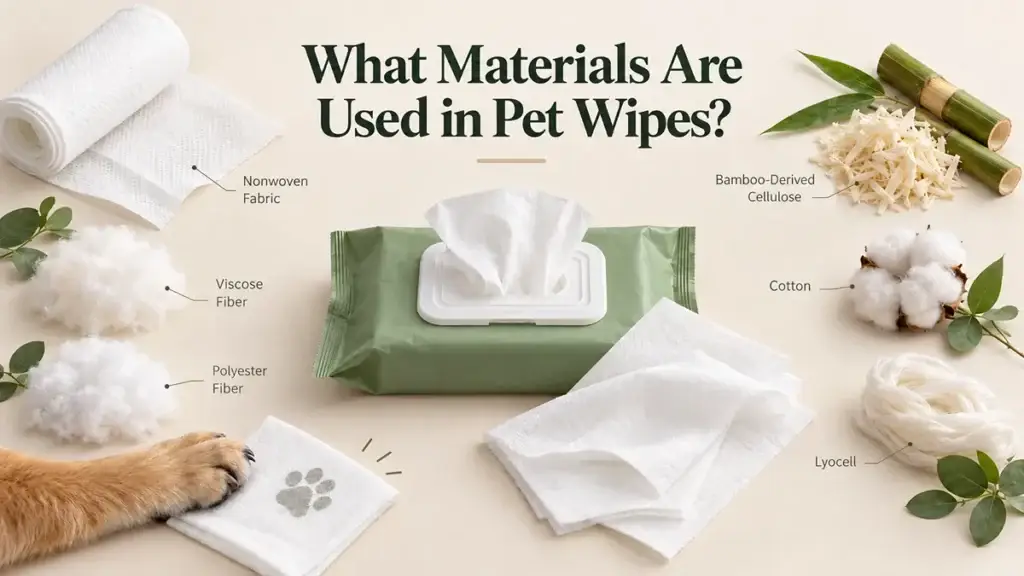
Most pet wipes use a nonwoven substrate saturated with a cleansing solution. The substrate may contain viscose, polyester, bamboo-derived cellulose, cotton, lyocell, or blended fibers, and these choices directly affect softness, absorbency, wet strength, texture, and durability.
This guide explains the main pet wipes materials, what pet wipes are made of, how common substrates differ, and which specifications buyers should compare before sourcing or developing a finished pet wipe.
Key Takeaways
- Most pet wipes use a nonwoven substrate rather than conventional woven fabric.
- Spunlace is a common nonwoven production method, but it describes how fibers are bonded, not what the fibers are made from.
- Viscose is widely used for softness and absorbency, while polyester can improve wet strength and durability.
- Bamboo-derived cellulose, cotton, and lyocell may be used depending on product positioning and performance requirements.
- Fiber type should never be evaluated alone. GSM, sheet size, texture, liquid loading, and packaging all influence finished-wipe performance.
- Terms such as plant-based, biobased, biodegradable, and compostable should be verified separately.
What Are Pet Wipes Made Of?
| Component | Main Function | Key Specifications |
|---|---|---|
| Nonwoven Substrate | Provides strength, softness, absorbency, and texture | Fiber composition, GSM, sheet size, pattern |
| Liquid Solution | Provides moisture and cleansing function | Formula, liquid loading, intended use |
The substrate is the physical wipe. It may be made from one fiber or a blend of several fibers, depending on the target feel and performance.
The liquid solution is developed separately and may vary between general pet cleaning wipes, grooming wipes, paw wipes, and other applications.
When people ask what are pet wipes made of, both parts matter. From a sourcing perspective, however, it is usually more practical to evaluate the substrate and liquid system separately before testing them together in the finished pack.
Why Nonwoven Fabric Is Common in Pet Wipes
Most pet wipes substrates use nonwoven fabric because it gives manufacturers more control over thickness, texture, softness, and fiber composition than a traditional woven textile.
A nonwoven sheet can be engineered by changing:
- Fiber type
- Fiber blend ratio
- GSM
- Surface pattern
- Bonding method
- Thickness
- Density
This flexibility is useful because different pet wipes have different performance priorities.
A coat-grooming wipe, for example, may need a softer hand feel and larger surface area. A paw-cleaning wipe may need stronger wet handling and more texture to lift dirt without tearing.
Nonwoven construction also makes it easier to combine cellulose-based and synthetic fibers in the same substrate. This is one reason pet wipes nonwoven fabric is widely used across cleaning and grooming products.
What Is Spunlace?
Spunlace, also known as hydroentanglement, is a common process used to make nonwoven wipe substrates.
High-pressure water jets entangle loose fibers into a cohesive sheet. The process can create a flexible material with a relatively soft surface and good handling when wet, which makes it well suited to wipe applications.
A point that often causes confusion is that spunlace is a manufacturing process, not a fiber type.
- Viscose
- Polyester
- Bamboo-derived cellulose
- Cotton
- Lyocell
- Mixed fibers
Two spunlace pet wipes can therefore behave very differently. One may feel softer and absorb more liquid, while another may be stronger and more resistant to tearing. The difference usually comes from fiber composition, GSM, surface structure, and blend ratio rather than the spunlace process alone.
Common Materials Used in Pet Wipes
Viscose
Viscose is a regenerated cellulose fiber commonly used in wipes because it is soft and absorbent.
It is often selected for grooming or general cleaning applications where a comfortable surface and good liquid holding are important.
However, viscose pet wipes should not be judged by fiber name alone. Wet strength can vary considerably depending on GSM, bonding, and whether viscose is blended with a stronger fiber.
Polyester
Polyester is a synthetic fiber valued mainly for strength and stability.
It absorbs less liquid than cellulose-based fibers, but it helps a wet wipe retain its structure during use. This is particularly useful when the wipe needs to withstand rubbing, pulling, or repeated passes over the same area.
For that reason, polyester pet wipes are commonly found in blended substrates rather than being selected primarily for absorbency.
Viscose-Polyester Blends
A viscose-polyester blend is often used when buyers want to balance softness, absorbency, and wet strength.
Viscose contributes softness and moisture handling. Polyester helps reinforce the sheet.
The correct blend depends on the product rather than a fixed ideal ratio. Buyers should consider intended cleaning task, desired hand feel, wet-strength requirement, GSM, sheet size, and target cost.
A wipe intended for muddy paws may require more reinforcement than one designed primarily for light coat grooming.
Bamboo-Derived Fibers
Bamboo is frequently used in plant-based product positioning, but the terminology needs to be handled carefully.
In many nonwoven wipes, bamboo is processed into regenerated cellulose before it becomes part of the final substrate. The feedstock may come from bamboo, but the finished fiber is no longer raw bamboo fiber.
This means bamboo pet wipes should not automatically be described as biodegradable, plastic-free, or compostable. Those claims depend on the full composition of the substrate and the finished product.
Cotton and Lyocell
Cotton can provide a soft, familiar natural-fiber feel and may be used in premium or natural-positioned wipes.
Lyocell is also a regenerated cellulose fiber and is commonly associated with softness, absorbency, and a smoother hand feel.
Both materials can work well in pet-care applications, but cost, wet strength, GSM, and finished construction still need to be considered.
Pet Wipe Material Comparison
| Material | Typical Characteristic | Typical Use in Wipes | Buyer Should Review |
|---|---|---|---|
| Viscose | Soft, absorbent | Grooming and general cleaning | Wet strength |
| Polyester | Strong, durable | Reinforcement | Synthetic fiber content |
| Viscose-Polyester Blend | Balanced performance | General-purpose substrate | Blend ratio and GSM |
| Bamboo-Derived Cellulose | Plant-derived feedstock | Softness and positioning | Actual fiber composition and claims |
| Cotton | Soft natural fiber | Premium applications | Cost and wet performance |
| Lyocell | Soft, absorbent | Premium substrate | Composition and GSM |
The table is useful for initial comparison, but the finished wipe should always be tested.
A heavier or more expensive fiber does not automatically produce a better wipe if sheet size, texture, liquid loading, or packaging are poorly matched to the application.
How Material Choice Affects Pet Wipe Performance
| Performance Factor | Main Influences | Why It Matters |
|---|---|---|
| Softness | Fiber type, bonding, surface structure | Comfort on coat and paws |
| Absorbency | Cellulose content, GSM, substrate structure | Liquid holding and cleaning |
| Wet Strength | Fiber blend, bonding, construction | Resistance to tearing |
| Texture | Pattern and embossing | Dirt pickup |
| Durability | Synthetic content, GSM, bonding | Handling during use |
A soft pet grooming wipe may work well for coat maintenance but feel too light when used on heavily soiled paws.
By contrast, pet cleaning wipes intended for paws usually benefit from stronger wet handling and a more textured surface.
This is why material selection should begin with the intended use rather than with a preferred fiber name.
What Does GSM Mean in Pet Wipes?
Pet wipes GSM means grams per square meter. It measures the basis weight of the nonwoven fabric.
It does not represent the total weight of one finished wipe.
GSM can affect:
- Perceived thickness
- Hand feel
- Wet strength
- Liquid-carrying capacity
- Cost
A higher GSM usually means more material per square meter, but that does not automatically mean better performance.
Two 50 GSM substrates can feel and perform differently if they use different fiber blends, surface patterns, spunlace structures, or sheet dimensions.
For buyers, GSM is most useful when considered together with fiber composition, sheet size, texture, and finished-wipe testing. That combination gives a much more realistic picture than GSM alone.
Pet Grooming Wipes vs. Pet Cleaning Wipes
| Product Type | Main Priority | Typical Material Considerations |
|---|---|---|
| Pet Grooming Wipes | Softness and coverage | Softer surface, larger sheet, balanced absorbency |
| Paw Cleaning Wipes | Dirt removal and wet strength | Stronger substrate, more texture |
| General Pet Cleaning Wipes | Balanced everyday use | Moderate softness, strength, and absorbency |
A viscose-polyester spunlace can be used for all three categories by adjusting fiber ratio, GSM, texture, and sheet size.
In practice, the intended task matters more than the label on the package.
For example, dog cleaning wipes for paws may need a stronger surface and better dirt pickup, while a wipe designed for coat maintenance may prioritize softness and sheet coverage.
How Should Buyers Choose Pet Wipe Materials?
Define the Use Case First
Before asking for a specific fiber or GSM, define how the wipe will be used.
- Paw cleaning
- Coat grooming
- General body cleaning
- Travel
- Large-dog cleaning
- Light everyday use
Each use case places different demands on softness, strength, texture, sheet size, and moisture level.
Compare Specifications as a System
Avoid choosing a substrate based on one feature such as bamboo or 50 GSM.
Review the complete specification:
- Fiber composition
- Blend ratio
- GSM
- Sheet size
- Surface pattern
- Liquid loading
- Fold format
A good material can still perform poorly if the sheet is undersized or the finished wipe is difficult to dispense.
Test the Finished Wipe
Raw-material data is useful, but the packaged wipe is what the customer actually uses.
Finished samples should be checked for:
- Wet pull strength
- Linting
- Ease of unfolding
- Sheet separation
- Dispensing consistency
- Moisture distribution
- Package resealing
These tests often reveal issues that do not appear on a material specification sheet.
Verify Environmental Claims
Material claims should be specific.
A plant-derived fiber does not automatically make a wipe plastic-free. Biobased content does not automatically mean biodegradable, and biodegradable does not automatically mean compostable.
For private label pet wipes materials, buyers should confirm whether supporting documentation applies to the fiber, nonwoven substrate, or finished wipe.
Conclusion
There is no single best material for every pet wipe. A substrate that works well for light grooming may not have enough strength or texture for paw cleaning, while a heavier wipe may add cost without improving the user experience.
For buyers, the practical approach is to define the intended use first, then compare fiber composition, GSM, sheet size, surface texture, and wet strength together. These specifications should be checked again in the finished sample, since dispensing, moisture distribution, linting, and package resealing can affect performance just as much as the raw material itself.
The final decision should be based on how the finished wipe performs in its intended application, not on one material name or headline specification.
FAQs
What are pet wipes made of?
Most pet wipes combine a nonwoven substrate with a liquid cleansing solution. The substrate may contain viscose, polyester, bamboo-derived cellulose, cotton, lyocell, or blended fibers depending on the required softness, absorbency, and wet strength.
What fabric is commonly used for pet wipes?
Spunlace nonwoven is widely used because it can provide a soft, flexible sheet with good wet handling. The actual fiber composition may include viscose, polyester, regenerated cellulose, cotton, or blends.
Are dog wipes different from pet wipes?
Dog wipes are a type of pet wipe designed for canine cleaning. The substrate may be similar to other wipes, but sheet size, texture, wet strength, and liquid formulation can be adjusted for paws, coat cleaning, or general grooming.
Are bamboo pet wipes biodegradable?
Not automatically. Bamboo-derived cellulose may come from a plant-based feedstock, but biodegradability depends on the full substrate and finished-product composition. Supporting evidence should be checked before making biodegradable or compostable claims.
What GSM is suitable for pet wipes?
There is no single ideal GSM. The appropriate basis weight depends on fiber blend, sheet size, intended use, wet-strength requirement, and desired hand feel.
Let's discuss your product requirements.
Share your product brief, estimated quantity and target timeline with WVSCM.
Request a Quote